Safety of Infilled Artificial Turf Systems
Artificial turf safety has become a growing concern for colleges and universities, particularly around concussion risk and crumb rubber infill materials. While research confirms modern turf systems are safe, not all systems are built the same. This guide explains what facility managers need to know about infilled artificial turf safety and highlights advanced alternatives like Mondo’s FTS‑3 Turf System, installed by Kiefer USA, that address impact absorption, heat reduction, and material safety without compromising performance.
The Safety of Infilled Artificial Turf Systems: What College Facility Managers Should Know
 Concerns around the safety of infilled artificial turf systems have received increased attention in recent years, particularly within collegiate and institutional athletic environments. As a facility manager responsible for athlete safety, performance, and long-term facility value, it’s important to separate headlines from facts and to understand the options available today.
Two primary concerns typically drive the conversation: the use of recycled crumb rubber infill and the potential relationship between turf systems and concussion-related head injuries.
What the Research Tells Us
The majority of independent studies and long-term data indicate that modern artificial turf systems are safe when properly designed, specified, and installed. However, safety is not solely about whether turf is “acceptable”, it’s about choosing a system that aligns with your institution’s performance standards, risk management goals, and sustainability initiatives.
That’s where newer turf technologies come into play.
Not All Turf Systems Are the Same
 As a buyer or decision-maker, it’s critical to know that viable, proven alternatives exist beyond traditional crumb rubber–based turf systems. Today’s turf solutions can be engineered to address impact absorption, heat reduction, drainage, and material safety more effectively than earlier generations.
One such solution is the FTS‑3 Turf System by Mondo, which is available through Kiefer USA.
A Smarter Approach to Player Safety
The FTS‑3 system is built around a prefabricated performance underlayment, rather than relying solely on loose-fill materials. This underlayment is engineered to deliver consistent, long-term shock absorption, helping maintain reliable G‑Max and Head Injury Criterion (HIC) values over time. For colleges and universities, this consistency is critical especially in high-use training and competition environments.
The underlayment also functions as an effective drainage layer, allowing water to move off the surface efficiently and reducing downtime after heavy use or weather events.
Moving Beyond Crumb Rubber
 One of the most significant advancements in the FTS‑3 system is its use of Ecofill, a next-generation infill material that is not derived from recycled tires.
Ecofill is a TPE (thermoplastic elastomer) that is:
- Free of heavy metals
- Free of amine aromatics
- Free of PAHs (polycyclic aromatic hydrocarbons)
- Widely tested and proven in U.S. athletic facilities
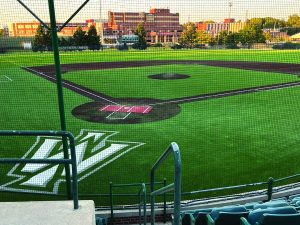
Because of its green color and material properties, Ecofill can also reduce surface temperatures by up to 70% compared to traditional black crumb rubber—an important consideration for athlete comfort and heat management.
From a performance standpoint, Ecofill delivers a more natural, earth-like feel, supporting realistic traction and energy return.
Designed for Performance, Safety, and Peace of Mind
The combination of the performance underlayment, advanced turf fibers, and Ecofill infill creates a system with excellent biomechanical performance while addressing many of the ecological and health concerns that facility managers and administrators raise during the approval process.
For colleges and universities, this means:
- A safer playing surface
- More predictable long-term performance
- Alignment with sustainability and risk mitigation goals
- Confidence when answering questions from coaches, athletes, and leadership
The Bottom Line for Facility Managers
 Artificial turf safety is not a one-size-fits-all conversation. The key takeaway is this: you have options.
Kiefer USA works with athletic directors, facility managers, and campus planners to evaluate turf systems based on usage, safety metrics, budget, and long-term value. From system selection to professional installation, our team helps facility managers make confident, informed decisions.
👉 Talk with Kiefer USA to evaluate turf solutions that meet your safety, performance, and budget goals. Contact our athletic flooring specialists today.
FAQs: Artificial Turf Safety for College & University Facilities
Are infilled artificial turf systems safe for college athletes?
Yes. Extensive research shows that properly designed and installed artificial turf systems are safe for athletic use. Performance depends heavily on the quality of the underlayment, infill materials, and long-term maintenance—not simply whether turf is used.
What are the main safety concerns with traditional turf systems?
Most concerns focus on two areas:
- Crumb rubber infill made from recycled tires
- Impact attenuation and potential concussion-related injuries
Newer turf technologies directly address both issues.
How does underlayment impact athlete safety?
A prefabricated performance underlayment helps maintain consistent G‑Max and HIC values over time, reducing the risk of head injuries. It also improves drainage, keeping the surface playable and safe in all conditions.
What is Ecofill and how is it different from crumb rubber?
Ecofill is a thermoplastic elastomer (TPE) infill that:
- Contains no heavy metals or PAHs
- Is not made from recycled tires
- Stays significantly cooler than crumb rubber
- Provides a more natural, soil-like playing feel
Can artificial turf contribute to heat-related issues?
Traditional crumb rubber can increase surface temperatures. Advanced infill systems like Ecofill can reduce surface heat by up to 70%, improving athlete comfort and safety during training and competition.
Is artificial turf appropriate for high-use collegiate facilities?
Yes. Modern turf systems are designed to handle:
- Heavy daily use
- Multiple sports
- Strength and conditioning activities
- Year-round scheduling
They often reduce downtime and maintenance compared to natural grass.
Why should colleges consider alternatives to traditional turf systems?
Advanced turf systems provide:
- Better long-term safety performance
- Reduced environmental and health concerns
- Improved durability and drainage
- Greater confidence during administrative and risk reviews
How does Kiefer USA support turf safety decisions?
Kiefer USA works with athletic departments to:
- Evaluate safety performance metrics
- Recommend proven turf systems
- Coordinate installation and compliance
- Support long-term facility planning